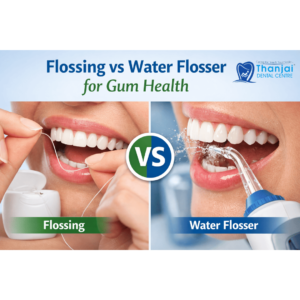
Healthy gums are the foundation of a healthy smile. While most people in Tamil Nadu understand the importance of brushing twice a day, many still overlook a critical part of oral hygiene—cleaning between the teeth. This is where flossing and water flossers come in.
If you’ve ever wondered whether traditional dental floss or a modern water flosser is better for your teeth and gums, you’re not alone. Patients frequently ask this question at Thanjai Dental Centre. The truth is, both tools can be highly effective when used correctly. The best choice depends on your dental needs, lifestyle, and comfort.
Let’s explore both options in detail so you can make the right decision for your oral health.
Why Cleaning Between Teeth Matters
Your toothbrush cleans only about 60% of your tooth surfaces. The remaining 40%—the spaces between teeth and along the gum line—are where plaque loves to hide. When plaque isn’t removed, it can lead to:
-
Gum inflammation (gingivitis)
-
Gum disease (periodontitis)
-
Cavities between teeth
-
Bad breath
-
Long-term tooth loss
In a region like Tamil Nadu, where diets can include sticky sweets, rice-based foods, and sugary beverages, food particles often get trapped between teeth. Interdental cleaning becomes even more important.
What Is Traditional Flossing?
Dental floss is a thin thread designed to slide between teeth and remove plaque and food debris.
Benefits of Flossing
✅ Highly effective plaque removal
Floss physically scrapes plaque from tooth surfaces.
✅ Affordable and accessible
Floss is inexpensive and available everywhere.
✅ Precise cleaning
You can target specific tight areas between teeth.
✅ Portable
Easy to carry while traveling.
Challenges of Flossing
❌ Requires proper technique
❌ Can be difficult with braces or bridges
❌ Some people find it time-consuming
❌ May cause bleeding if done aggressively
Many patients say, “I tried flossing but my gums bleed.” In reality, bleeding often means your gums are inflamed due to plaque. With gentle daily flossing, this usually improves within a week or two.
What Is a Water Flosser?
A water flosser (oral irrigator) uses a stream of pulsating water to clean between teeth and along the gum line. It’s a modern solution gaining popularity across Thanjavur and other cities.
Benefits of Water Flossers
✅ Easy to use
Great for beginners or those with limited dexterity.
✅ Ideal for braces and implants
Cleans around wires, brackets, and dental work.
✅ Gentle on gums
Less irritation for sensitive gums.
✅ Massage effect
Stimulates gums and improves circulation.
Challenges of Water Flossers
❌ Higher initial cost
❌ Needs electricity or charging
❌ Less portable than floss
❌ Requires regular maintenance
Which Is More Effective?
Research shows both flossing and water flossers can reduce plaque and improve gum health. However, effectiveness depends on how consistently and correctly you use them.
Floss May Be Better If:
-
You have tight spaces between teeth
-
You prefer a low-cost option
-
You have excellent manual control
-
You want maximum plaque scraping
Water Flosser May Be Better If:
-
You wear braces or retainers
-
You have dental implants or bridges
-
You have sensitive or bleeding gums
-
You struggle with floss technique
-
You want a more comfortable experience
At Thanjai Dental Centre, dentists often recommend a combination approach for some patients—using floss for tight contacts and a water flosser for overall gum care.
Common Mistakes to Avoid
Whether you choose floss or a water flosser, avoid these mistakes:
❌ Skipping interdental cleaning
Brushing alone is not enough.
❌ Being too aggressive
Hard flossing can damage gums.
❌ Inconsistent routine
Cleaning once a week won’t help much.
❌ Stopping because of bleeding
Mild bleeding often improves with regular care.
How Often Should You Clean Between Teeth?
Dentists recommend once daily, ideally at night before brushing. Nighttime cleaning removes food particles and plaque that build up throughout the day.
Tips for Better Gum Health
Here are simple expert tips for maintaining strong gums:
✔ Brush twice daily
Use a soft-bristled toothbrush.
✔ Clean between teeth daily
Use floss or a water flosser.
✔ Rinse after meals
Especially after sweets and sticky foods.
✔ Drink more water
Helps wash away food debris.
✔ Visit your dentist regularly
Professional cleanings are essential.
What Do Dentists Recommend Most?
There is no one-size-fits-all answer. The best tool is the one you will use daily and correctly.
For many families in Tamil Nadu, starting with traditional floss is a great step. If you find flossing difficult, a water flosser can be a worthwhile investment in your oral health.
A personalized dental consultation can help determine what suits your teeth and gums best.
When Should You See a Dentist?
Visit a dental clinic if you notice:
-
Bleeding gums
-
Persistent bad breath
-
Swollen or painful gums
-
Food frequently getting stuck
-
Gum recession
These may be early signs of gum disease that require professional care.
Expert Dental Care in Thanjavur
Maintaining gum health is easier with the right guidance. At Thanjai Dental Centre in Thanjavur, Tamil Nadu, patients receive personalized advice based on their dental condition, lifestyle, and long-term needs.
With advanced dental care, modern technology, and a patient-friendly approach, the clinic helps families achieve healthier smiles that last a lifetime.
Final Thoughts
Flossing and water flossers are both excellent tools. The key is consistency. Even the best tool won’t help if it sits unused on a shelf.
If you’re unsure where to start, a dental check-up can give you clarity and confidence. Healthy gums support healthy teeth—and a confident smile.
Your smile deserves daily care, the right tools, and expert guidance.