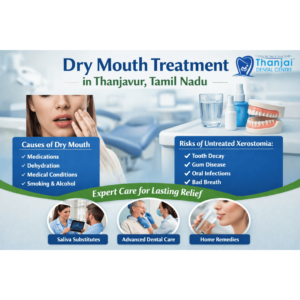
Do you often feel your mouth is dry or sticky? Do you need to sip water frequently to feel comfortable while speaking or eating? If yes, you may be experiencing dry mouth, medically known as xerostomia.
Many people in Tamil Nadu ignore dry mouth, thinking it’s a minor inconvenience. But saliva plays a crucial role in protecting your teeth and gums. When your mouth doesn’t produce enough saliva, your oral health can suffer in several ways.
Let’s explore the causes, risks, and effective treatments for dry mouth—and how expert dental care in Thanjavur can help you find lasting relief.
Why Is Saliva So Important?
Saliva is not just “water” in your mouth. It is a protective fluid that:
-
Washes away food particles
-
Neutralizes harmful acids
-
Prevents tooth decay
-
Reduces bacterial growth
-
Helps in digestion
-
Keeps oral tissues moist and comfortable
Without enough saliva, your mouth becomes more vulnerable to cavities, infections, and gum disease.
Common Symptoms of Dry Mouth
If you experience any of the following regularly, you may have xerostomia:
-
Sticky or dry feeling in the mouth
-
Frequent thirst
-
Cracked lips
-
Burning sensation in the mouth
-
Difficulty chewing, swallowing, or speaking
-
Dry or sore throat
-
Bad breath
-
Changes in taste
Early recognition is key. The sooner you address dry mouth, the easier it is to prevent complications.
What Causes Dry Mouth?
Dry mouth can happen for many reasons. Some of the most common include:
1) Medications
Many prescription and over-the-counter medicines list dry mouth as a side effect. These include:
-
Allergy medications
-
Blood pressure drugs
-
Antidepressants
-
Pain relievers
If you’re on long-term medication and notice dryness, a dental consultation is wise.
2) Medical Conditions
Certain health issues reduce saliva production, such as:
-
Diabetes
-
Thyroid disorders
-
Autoimmune diseases
-
Sinus problems
Managing the root cause often improves oral comfort.
3) Aging
As people grow older, they may take more medications or experience health conditions that contribute to dry mouth. However, dry mouth is not a normal part of aging and should not be ignored.
4) Dehydration
Hot weather, low water intake, fever, or excessive sweating—common in many parts of Tamil Nadu—can lead to dehydration and reduced saliva.
5) Lifestyle Habits
-
Smoking or tobacco use
-
Alcohol consumption
-
High caffeine intake
These habits dry out oral tissues and reduce saliva flow.
Risks of Ignoring Dry Mouth
Many patients are surprised to learn that untreated xerostomia can lead to serious oral problems.
Increased Tooth Decay
Saliva protects enamel. Without it, cavities form more easily and spread faster.
Gum Disease
Dry mouth allows harmful bacteria to thrive, raising the risk of gum infections.
Oral Infections
Fungal infections like oral thrush are more common when saliva is low.
Difficulty Wearing Dentures
Saliva helps dentures stay comfortable. Without it, irritation and sores may occur.
Practical Tips to Manage Dry Mouth at Home
While professional care is important, these daily habits can help:
Stay Hydrated
Sip water throughout the day. Don’t wait until you feel thirsty.
Chew Sugar-Free Gum
This stimulates saliva production naturally.
Avoid Tobacco & Alcohol
Both worsen dryness and harm oral tissues.
Limit Sugary and Acidic Foods
They increase the risk of cavities in a dry mouth.
Use a Humidifier at Night
Moist air can reduce dryness while sleeping.
Choose the Right Toothpaste & Mouthwash
Alcohol-free and fluoride-based products are best for dry mouth patients.
Professional Treatments for Dry Mouth
Home remedies help, but persistent dry mouth often needs expert attention. A dental professional can:
-
Identify underlying causes
-
Recommend saliva substitutes
-
Provide fluoride treatments to protect teeth
-
Suggest diet and lifestyle adjustments
-
Coordinate care with your physician if needed
Advanced dental clinics in Thanjavur use modern diagnostic tools to evaluate saliva flow and oral health status before recommending treatment.
Why Early Dental Consultation Matters
Dry mouth may seem minor at first, but it can quickly lead to:
-
Multiple cavities
-
Gum disease
-
Tooth sensitivity
-
Oral discomfort
Early care saves time, money, and discomfort. A timely dental visit ensures small problems don’t become major treatments later.
Expert Dry Mouth Care in Thanjavur
Patients across Tamil Nadu increasingly seek specialized care for xerostomia because awareness is growing. Modern dental practices focus not only on treating symptoms but also on finding and addressing the root cause.
Thanjai Dental Centre is known for its patient-friendly approach, advanced dental technology, and customized treatment plans. The clinic evaluates each patient’s medical history, medications, and lifestyle before suggesting solutions.
Whether your dry mouth is mild or severe, personalized care can dramatically improve comfort and oral health.
Who Should Definitely See a Dentist for Dry Mouth?
Book a consultation if you:
-
Feel dryness daily
-
Get frequent cavities
-
Have persistent bad breath
-
Experience mouth burning or soreness
-
Wear dentures and feel discomfort
-
Take long-term medications
Final Thoughts: Don’t Ignore Dry Mouth
A healthy smile needs adequate saliva. Dry mouth is more than a discomfort—it’s a warning sign your oral environment needs attention.
With the right care, guidance, and modern dental support available in Thanjavur, you can protect your teeth, improve comfort, and maintain a confident smile.
If dry mouth is affecting your daily life, seeking professional dental advice could be the best step toward lasting relief and better oral health.